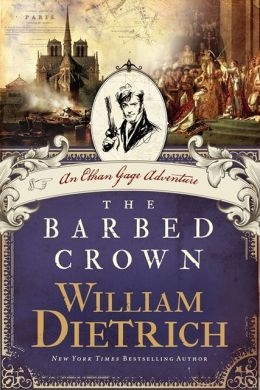
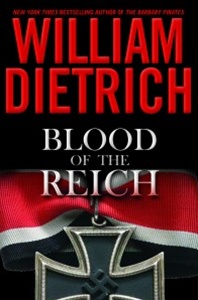
VJ Books Presents Author William Dietrich!
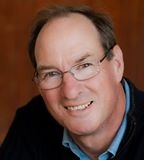 William Dietrich was born on September 1951 in Tacoma, WA. He attended Fairhaven College, an experimental liberal arts division of Western Washington University. Interest in writing led him to journalism at Western, and his first job was covering agricultural Skagit County for the Bellingham, WA, Herald. William Dietrich was born on September 1951 in Tacoma, WA. He attended Fairhaven College, an experimental liberal arts division of Western Washington University. Interest in writing led him to journalism at Western, and his first job was covering agricultural Skagit County for the Bellingham, WA, Herald.
From 2006-2011, he took a half-time position as an assistant professor teaching environmental journalism and writing at Western, advising a student magazine called Planet
Dietrich's first book, The Final Forest, (1992) grew out of his reporting on the spotted owl and old growth forest debate that convulsed the Pacific Northwest.
Dietrich also worked on a history of the college where he taught, called Green Fire, that recounts the story of Huxley College of the Environment. That one has been a collaborative effort with students, staff, and alumni, and was published in the spring of 2011. He has also contributed essays to several local books, in which the proceeds went to environmental organizations, on the geography and environment of Northwest Washington.
He is married to the wonderful woman that he met in college, has two grown daughters, and six grandchildren. When not writing, Dietrich likes to read, hike, sail, and travel.
|
|
William Dietrich Bibliography
Ethan Gage Adventures
-
Napoleon's Pyramids - 2007
- The Rosetta Key - 2008
- The Dakota Cipher - 2009
- The Barbary Pirates - 2010
- The Emerald Storm - 2012
- The Barbed Crown - 2013
- The Three Emperors - 2014
- The Trojan Icon - 2016
Stand-Alone Novels
- Ice Reich - 1998
- Getting Back - 2000
- Dark Winter - 2001
- Hadrian's Wall - 2004
- The Scourge of God - 2005
- Blood of the Reich - 2011
Non-Fiction
- The Final Forest: The Battle for the Last Great Trees of the Pacific Northwest - 1992
- The Final Forest: Big Trees, Forks, and the Pacific Northwest - 2010
- Northwest Passage: the great Columbia River - 1995
- Natural Grace: The Charm, Wonder, and Lessons of Pacific Northwest Animals and Plants - 2003
- On Puget Sound - 2007
- Natural Skagit: A Journey from Mountains to Sea - 2008
- Critical Messages: Contemporary Northwest Artists on the Environment - 2010 (co-authored with Sarah Clark-Langager)
Go to top of page
|
|
|


 Follow him on Facebook